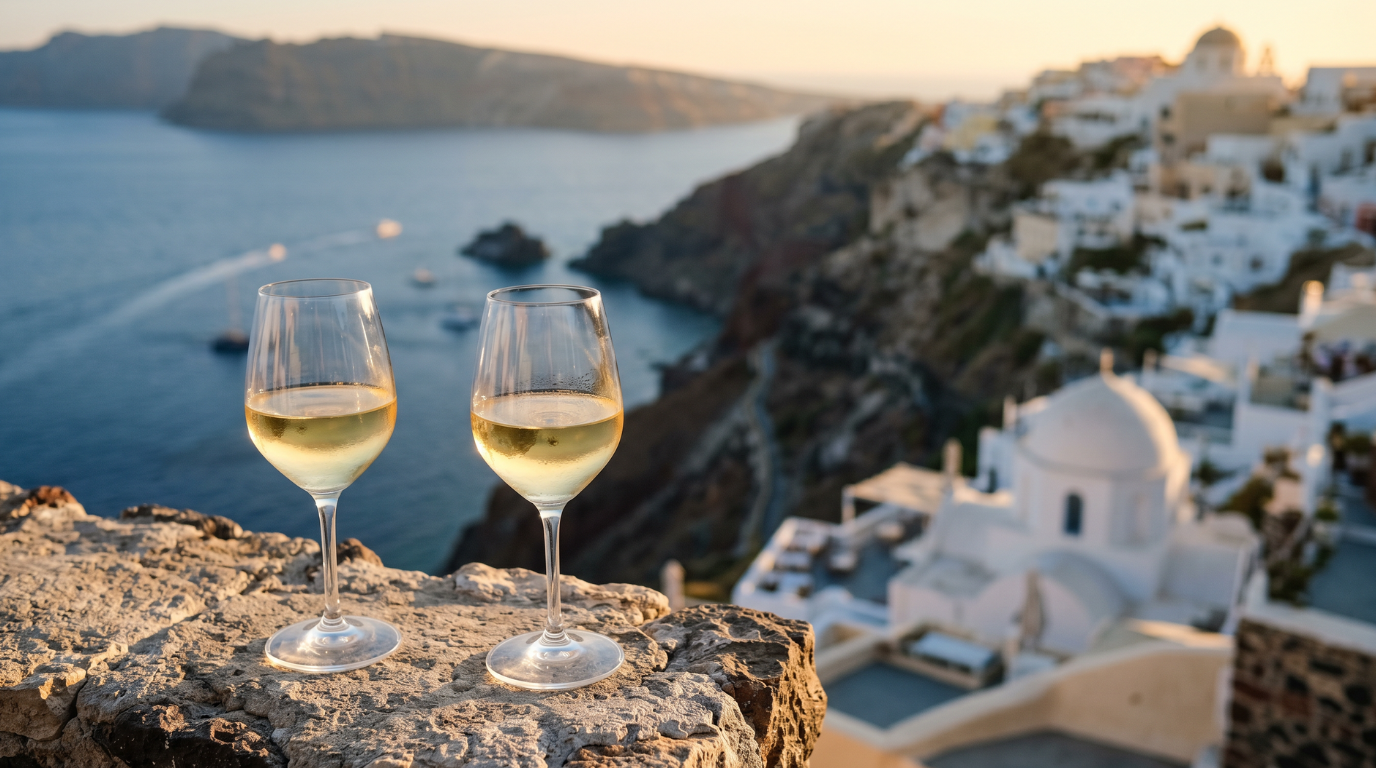
Every wine tour in Santorini starts with the same grape. Before the first glass is poured, before the sommelier explains the volcanic soil or points toward the caldera, there’s Assyrtiko. It’s on every tasting menu, in every winery, and in almost every serious conversation about Greek wine.
If you’re visiting Santorini and you don’t know what Assyrtiko is yet, this is the guide to read first. Not because you need to be a wine expert to enjoy it, but because understanding what’s in your glass makes the experience dramatically richer.
The short version: Assyrtiko is a white grape indigenous to Santorini with a 3,500-year history. It produces bone-dry wines with razor-sharp acidity, citrus freshness, and a distinctive salty minerality that comes directly from the island’s volcanic soil. No other place on earth makes it quite like Santorini does.
What Is Assyrtiko?
Assyrtiko (pronounced ah-SEER-tee-koh) is a white wine grape native to Santorini. It’s been grown on the island for approximately 3,500 years, making it one of the oldest continuously cultivated wine varieties in the world.
What makes it unusual isn’t just its age. It’s the fact that Assyrtiko does something almost no other grape can: it retains fierce, mouth-watering acidity even when fully ripe in extreme heat. In most wine regions, hot summers soften a grape’s acidity and raise sugar levels, producing flabby, low-acid wines. Santorini’s summers are scorching, dry, and relentless. Assyrtiko doesn’t just survive those conditions; it thrives in them, producing wines that are simultaneously concentrated and electric.
This is why sommeliers worldwide have started paying close attention. Decanter describes Santorini Assyrtiko as having “a pronounced savoury profile, stony minerality and citrus freshness.” Wine writers frequently compare its aging potential to Riesling, a comparison that would have seemed outlandish for a Greek white wine just two decades ago.
The Three Styles You’ll Encounter
Not all Assyrtiko is the same. On a wine tour, you’ll typically taste across two or three of these styles:
| Style | Character | What to Expect |
|---|---|---|
| Dry Assyrtiko | Unoaked, stainless steel | Citrus, sea spray, flint, razor acidity |
| Nykteri | Oak-aged Assyrtiko | Lemon curd, brioche, toasted almond, more body |
| Vinsanto | Sun-dried, sweet | Amber, honey, dried fig, oxidative richness |
The dry style is what most people mean when they say “Assyrtiko.” Nykteri adds weight and complexity without losing the grape’s signature structure. Vinsanto is a world unto itself, one of Greece’s most extraordinary sweet wines.
How Does Assyrtiko Taste?
The best description I’ve heard from guests tasting it for the first time: “it tastes like the island smells.” That sounds poetic, but it’s accurate.
Dry Assyrtiko leads with bright citrus: lemon, lime, grapefruit. Then comes the minerality, which is where Santorini’s version separates itself from every other. There’s a saline, almost briny quality, like sea spray on a hot rock. The acidity is high and focused. The finish is long and clean.
What Assyrtiko is NOT: it’s not fruity in the way a New World Chardonnay is. It’s not soft or round. It doesn’t try to please everyone. It’s structured, precise, and unmistakably itself.
Tasting Notes at a Glance
- Nose: lemon zest, white peach, flint, subtle white pepper, occasional jasmine
- Palate: grapefruit, lime, wet stone, sea spray, citrus pith
- Structure: high acidity, medium body, long mineral finish
- With age (5-10 years): honey, beeswax, preserved lemon, intensified minerality
That aging potential is worth noting. Quality Santorini Assyrtiko can cellar for 5 to 10 years or more, developing layers of honey and dried fruit while holding its structure. This is exceptionally rare for a white wine from a hot climate, and it’s one of the reasons serious collectors have started seeking it out.
Why Santorini’s Assyrtiko Is Unlike Any Other
Assyrtiko is now grown in other parts of Greece and even experimentally in California. But winemakers who’ve tried to replicate Santorini’s results are consistent in their conclusion: there is no place on earth that can reproduce the terroir of Santorini.
Here’s why.
The Volcanic Soil
Santorini’s soil is composed of basalt, white ash, sand, and volcanic pumice, with minimal clay and almost no organic matter. The soil pH sits at around 8.0, highly alkaline and mineral-rich. Annual rainfall is just 350mm, technically classifying Santorini as a desert climate.
These extreme conditions do two things. First, they stress the vines heavily, concentrating flavor and preserving acidity in the finished wine. Second, the porous pumice allows vine roots to reach deep underground for moisture, sometimes extending 20 meters or more into the earth.
The same volcanic pumice that makes growing conditions brutal also saved Santorini’s vines from phylloxera, the pest that devastated nearly every vineyard in Europe in the 19th century. Phylloxera cannot survive in sandy volcanic soil, which is why most Santorini vines remain ungrafted on their original rootstocks. Many are 70 to 250 years old.
The Kouloura Vine Training
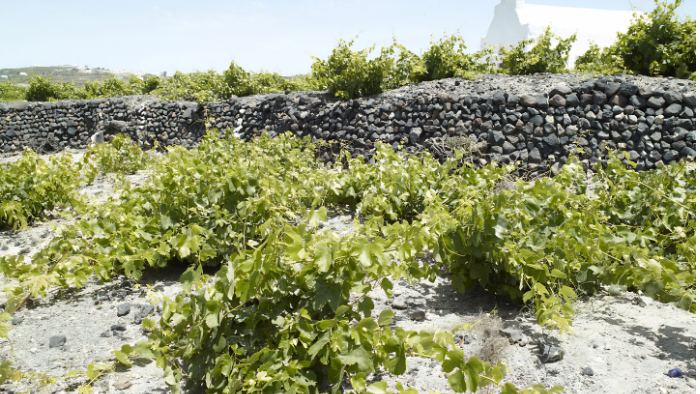
Walk through a Santorini vineyard and you’ll notice the vines look nothing like what you’d see in Burgundy or Bordeaux. Instead of upright trellised rows, they coil close to the ground in tight basket shapes called kouloura.
This isn’t aesthetic. It’s survival engineering. The baskets protect the grapes from Santorini’s fierce Meltemi winds and shield them from the reflective heat of the volcanic soil. The grapes hang inside the basket, shaded and protected, while the vine absorbs the full intensity of the island’s sun.
The result: low yields (roughly half those of Bordeaux), intensely concentrated fruit, and wines with a depth of character that’s impossible to achieve on higher-yielding vines.
Key fact: PDO Santorini regulations require a minimum of 75% Assyrtiko in any wine carrying the Santorini designation. Athiri and Aidani are the permitted blending partners.
What to Eat With Assyrtiko
Assyrtiko’s high acidity and saline minerality make it one of the most food-friendly white wines you’ll encounter. The structure cuts through richness, the citrus lifts seafood, and the mineral finish complements almost anything from the Aegean.
The classic pairings on the island:
- Fresh seafood and grilled octopus – the acidity and salinity mirror the sea itself
- Fava (yellow split pea puree) – a Santorini staple that the wine’s minerality elevates completely
- Tomato keftedes (Santorini tomato fritters) – the island’s famous cherry tomatoes and Assyrtiko are a natural match
- White fish and grilled prawns – clean, precise, and mutually enhancing
- Soft cheeses and labneh – the acidity cuts the fat and refreshes the palate
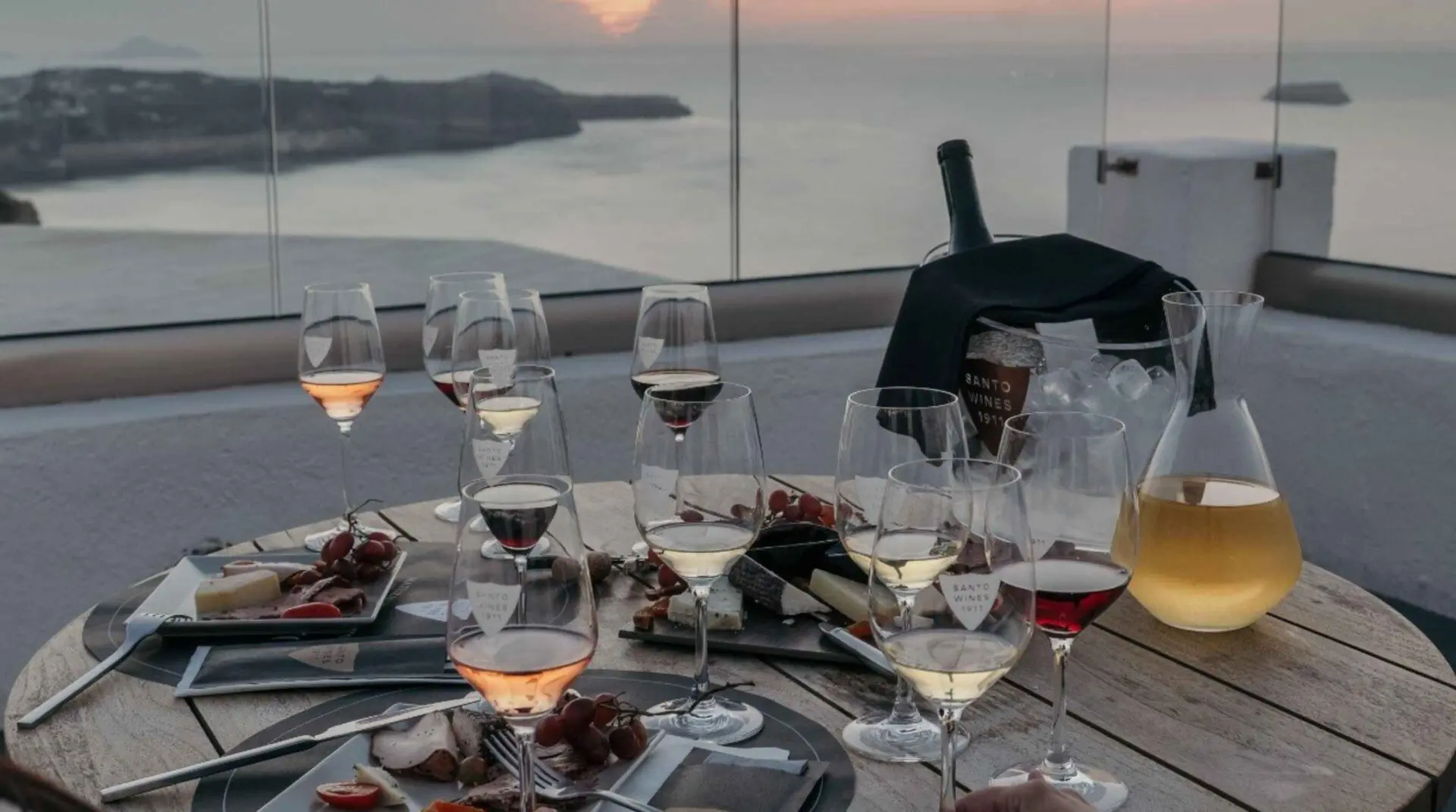
On our 5-Hour Santorini Daytime Wine Tour, each tasting is paired with Cycladic bites chosen specifically to show how local food and Assyrtiko interact. It’s one of the most effective ways to understand what the wine is actually doing.
Where to Taste Assyrtiko in Santorini
Every winery on the island produces Assyrtiko, but the character varies significantly between producers. Some lean into the stainless steel style for maximum freshness and salinity. Others use oak to build complexity. A few specialize in aged expressions that show what the grape becomes with time.
The best way to understand those differences is to taste across multiple producers in a single day, with a guide who can explain what you’re experiencing in real time. Reading about minerality and tasting it are very different things.
Wineries Known for Exceptional Assyrtiko
- Estate Argyros (est. 1903): one of the island’s most respected producers, known for old-vine Assyrtiko with exceptional concentration and aging potential
- Domaine Sigalas: widely credited with helping introduce Santorini Assyrtiko to international markets; precise, expressive dry whites
- Gavalas: one of the oldest family estates on the island, focused on indigenous varieties and traditional methods
Our best wineries guide covers the full landscape if you want to go deeper before your visit.
The Case for a Guided Tasting
Visiting a single winery on your own gives you one producer’s interpretation of Assyrtiko. A guided tour across three estates gives you a comparative education. You taste the same grape through different lenses: different soils within the island, different winemaking philosophies, different ages of vine.
That comparison is where the understanding happens. It’s the difference between reading about the kouloura and standing in a vineyard while your sommelier explains exactly how those basket-shaped vines protect the grapes you’re about to taste.
Our Mini Wine Tour covers two estates in 3 hours, ideal for cruise passengers or shorter visits. The 5-Hour Daytime Tour covers three wineries and 12 wines, giving you the full comparative picture. Both are private, both include a certified sommelier, and both start with Assyrtiko.
Ready to Plan Your Visit?
Book a Private Santorini Wine Tour with Wineland Tours
Whatever season you choose, a private wine tour with a certified sommelier is one of Santorini’s most memorable experiences. Browse our estate winery tours, sunset tastings, and curated island journeys.
Frequently Asked Questions About Assyrtiko Wine
What is Assyrtiko wine?
Assyrtiko is a white grape native to Santorini, known for high acidity, citrus notes, and a strong mineral character shaped by volcanic soil.
What does Assyrtiko taste like?
Assyrtiko usually tastes like lemon, lime, grapefruit, wet stone, and sea spray, with a long, clean finish and sharp acidity.
Why is Santorini Assyrtiko different?
Santorini’s volcanic soil, dry climate, and kouloura vine training create a version of Assyrtiko that is especially concentrated, saline, and mineral-driven.
What foods go best with Assyrtiko?
Assyrtiko pairs well with seafood, grilled octopus, fava, tomato fritters, white fish, prawns, and soft cheeses because its acidity cuts richness and lifts salty flavors.
How long can Assyrtiko age?
Good Assyrtiko can age for 5 to 10 years or more, developing honey, beeswax, and preserved lemon while keeping its structure and freshness.
What is Nykteri?
Nykteri is an oak-aged Santorini wine style that often uses Assyrtiko. It is fuller-bodied, richer, and more complex than the classic dry version.
Where should I taste Assyrtiko in Santorini?
The best way to taste Assyrtiko is on a guided wine tour that visits multiple wineries, so you can compare styles and understand how producers interpret the grape. Browse our private Santorini wine tours to plan a tasting day across volcanic vineyards with sommelier-led commentary.
Written by
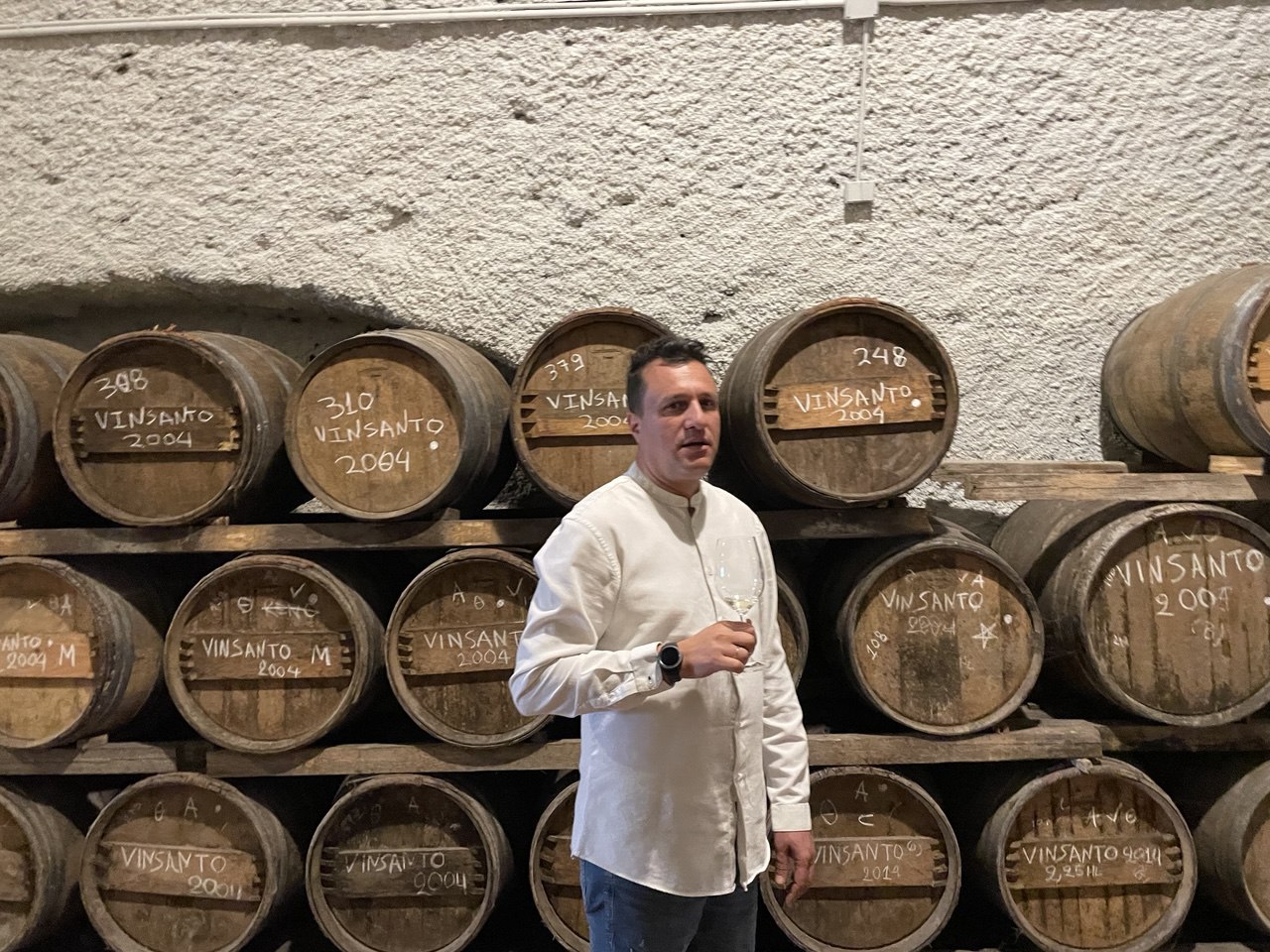
Yiannis Kotzampasakis
Co-Founder & CEO · WSET Certified Sommelier · Wineland Tours
Yiannis was born in Athens and has called Santorini home for the past seven years. With a Bachelor’s degree in Tourism and over 20 years of experience across tourism and wine, he designs Wineland experiences with the confidence of someone who knows both the island and the glass. He guides guests through Santorini’s wines with clarity and warmth, making wine approachable for beginners while still exciting for seasoned enthusiasts.