
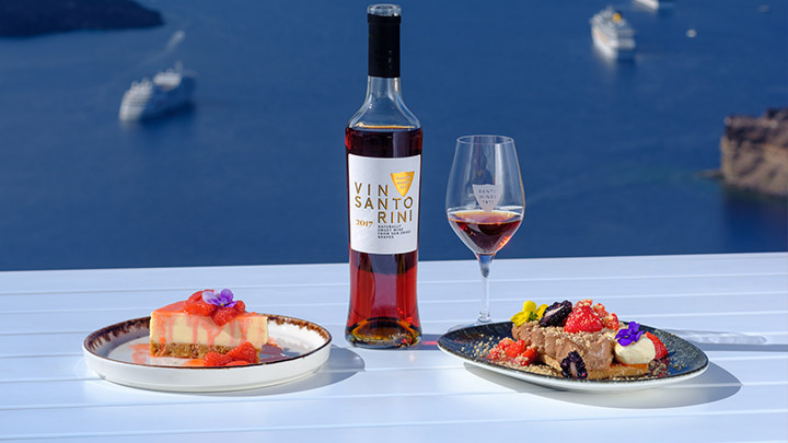
You’ve seen the deep amber bottles lined up at every winery tasting room. Your server sets down a small pour at the end of the meal and says, simply, “Vinsanto.” You take a sip and wonder how something this rich, this layered, this intensely honeyed could come from the same sun-scorched volcanic island that produces Santorini’s famously bone-dry Assyrtiko whites.
That contrast is exactly what makes Vinsanto so special. And knowing how to drink it properly, what to eat alongside it, when to serve it, and what to expect, turns a good sip into an unforgettable experience.
If you’re visiting Santorini and only try one wine, make it Vinsanto. This guide tells you everything you need to know to enjoy it like a local.
Already curious about how Vinsanto is actually made? Read our full guide: Vinsanto Santorini: History, Taste & How It’s Made
How to Serve Vinsanto: Temperature, Glass, and Pour Size
Most visitors encounter Vinsanto at the end of a tasting flight, served however the winery chooses to present it. But if you’re buying a bottle to enjoy at your villa, on a sunset terrace, or back home, these details make a real difference.
Temperature
Serve Vinsanto chilled, but not cold. The ideal range is 6 to 8°C (43 to 46°F). At home or in a cooler climate, pull it from the fridge about 10 to 15 minutes before pouring to let it come up slightly in temperature. Too cold and the aromas close up; too warm and the sweetness becomes heavy and one-dimensional.
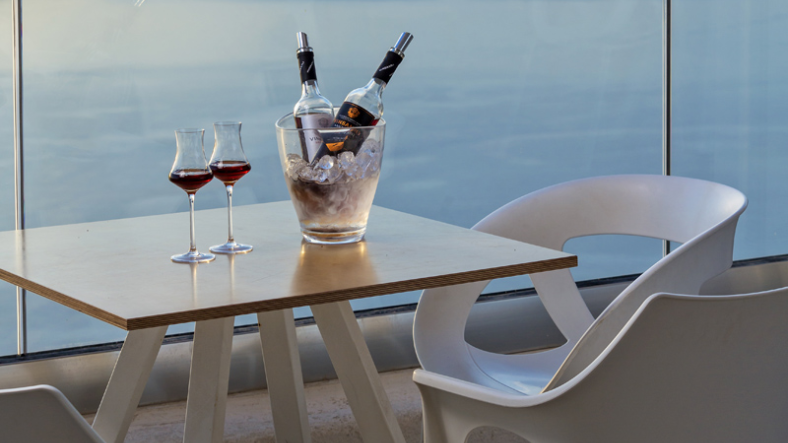
If you’re in Santorini in summer, skip the waiting. Ambient temperatures on the island regularly exceed 30°C, and a glass left out will reach 20°C or more within minutes, well past the ideal range. In summer, pour straight from the fridge and drink promptly, or keep the bottle in an ice bucket while you sip.
Glassware
Skip the large Burgundy bowl. Vinsanto is best served in a small dessert wine glass or a narrow tulip-shaped glass. The smaller opening concentrates the aromas, which is where most of Vinsanto’s complexity lives: dried fig, candied orange peel, caramel, warm spice. A large glass dissipates those aromas before they reach your nose.
Pour Size
Vinsanto is rich and intensely flavored. Pour sizes differ by context:
- Wine tasting (winery or guided tour): a standard tasting portion is 40ml
- Restaurant service or home pour: the typical serving is 60 to 90ml, roughly half what you’d pour for a dry table wine
This isn’t stinginess; it’s the right amount to appreciate the wine without overwhelming your palate.
| Detail | Recommendation |
|---|---|
| Serving temperature | 6 to 8°C (43 to 46°F) |
| Glass type | Small dessert wine or tulip glass |
| Tasting pour | 40ml |
| Decanting | Not necessary |
| Cellaring potential |
30+ years |
The Best Food Pairings for Vinsanto
The golden rule with dessert wines: match sweetness with sweetness, and let the wine’s acidity do the work. Vinsanto has unusually high acidity for a sweet wine, a direct result of the Assyrtiko grape it’s made from. That acidity is your best friend at the table. It cuts through richness, refreshes the palate between bites, and keeps the wine from feeling cloying even alongside very sweet foods.
Here’s how to pair it well, from the most traditional combinations to a few that might surprise you.
Greek Sweets and Pastries
This is where Vinsanto is most at home. The honey-and-nut flavors in classic Greek pastries mirror the wine’s own profile almost perfectly.
- Baklava – the honey, walnut, and phyllo combination is the most traditional pairing on the island. The wine’s acidity cuts through the syrup while the dried fruit notes amplify the nut filling.
- Kataifi – shredded phyllo with nuts and honey works on the same principle as baklava, with a slightly lighter texture.
- Loukoumades – fried honey dough balls are a casual, street-food-style pairing that works surprisingly well.
- Almond biscuits (amygdalota) – a classic Santorini sweet, these pair with Vinsanto in the way a shortbread pairs with a fine Sauternes. Simple, clean, and effective.
Cheese
This is where Vinsanto earns its reputation as a versatile wine, not just a dessert wine.
- Aged Greek cheeses (graviera, kefalotyri): the salty, nutty character of aged hard cheeses contrasts beautifully with the wine’s sweetness. Salt and sweet is one of the most reliable flavor pairings in food, and it works here with particular elegance.
- Blue cheese: the sharpness and funk of a good blue cheese against Vinsanto’s honeyed sweetness is a classic combination. Think of it as the Greek answer to Sauternes and Roquefort.
Chocolate and Fruit-Based Desserts
- Dark chocolate: the bitterness of high-cocoa chocolate (70%+) balances the wine’s sweetness and echoes its dried-fruit undertones. Milk chocolate works too, though it makes for a richer, heavier pairing.
- Dried figs and apricots: these bring out the dried fruit notes already present in the wine, making the pairing feel seamless.
- Quince preserves (kydonopasto): a traditional Greek preserve that mirrors Vinsanto’s caramel and citrus peel notes almost exactly.
Savory Pairings (for the Adventurous)
Vinsanto isn’t strictly a dessert wine, and locals don’t always treat it as one.
- Foie gras or rich pâté: the fattiness and richness of foie gras is balanced by the wine’s acidity and sweetness. This is a classic fine-dining pairing that works just as well in a Santorini taverna as it does in a Parisian restaurant.
- On its own, as a digestif: many Santorini locals simply pour a small glass after dinner with no food at all. The wine is complex enough to stand alone, and this is arguably the purest way to experience it.
Key pairing principle: Vinsanto should never be paired with lighter, more delicate flavors. Its intensity will overwhelm a fruit salad or a plain yogurt. Aim for foods that are equally rich, sweet, or bold.
When to Drink Vinsanto: Moments That Make It Special
Part of what makes Vinsanto memorable in Santorini is the context in which you drink it. The wine has been produced on this island for centuries, and it carries a sense of occasion that few wines can match.
As a Dessert Wine After Dinner
The most common and natural moment. Order it at the end of a meal at a Santorini restaurant, ask for a small pour alongside whatever sweet the kitchen is sending out, and let the combination do the work. Most restaurants on the island carry at least one Vinsanto by the glass.
During a Winery Tasting
This is the best way to try Vinsanto for the first time. Most Santorini wineries include it at the end of a tasting flight, after the dry whites and any reds. By the time you reach the Vinsanto pour, you’ve already tasted the Assyrtiko grape in its dry form, which makes the contrast with the sweet, concentrated Vinsanto all the more striking. The volcanic soil, the sun-dried grapes, the years of oak aging: you taste the whole story in a single glass.
As a Gift to Take Home
Vinsanto travels well. A bottle purchased directly from a Santorini winery is one of the most meaningful souvenirs you can bring back, and because it’s a PDO-protected wine produced only on this island, it genuinely cannot be replicated anywhere else in the world. According to Wine Folly, well-stored Vinsanto can cellar for 30 years or more, meaning a bottle bought today will still be worth opening years from now.
Common Mistakes to Avoid
Vinsanto is forgiving, but a few missteps can flatten the experience:
- Serving it too cold. Straight from the fridge, the wine loses its aromatic complexity. Give it a few minutes to warm slightly before pouring.
- Using a large wine glass. The aromas escape before they reach your nose. Use a small glass to concentrate the experience.
- Pairing it with light or delicate foods. A green salad or fresh fruit will be overwhelmed. Vinsanto needs a partner with equal intensity.
- Confusing it with Italian Vin Santo. They share a similar name and are both made from dried grapes, but they are entirely different wines. Greek Vinsanto is a PDO-protected product of Santorini, made primarily from Assyrtiko, and has a distinct volcanic-island character that Italian Vin Santo does not.
- Drinking it too fast. This is a wine meant to be sipped slowly. The flavors evolve in the glass as it warms slightly, and a small pour lasts longer than you’d expect.
Taste It at the Source
Reading about Vinsanto is one thing. Tasting it at the winery where it was made, poured by someone who can walk you through the harvest, the drying process, and the years of oak aging, is something else entirely.
Santorini’s wine villages (Megalochori, Pyrgos, Exo Gonia, and Foinikia among them) are home to wineries that have been producing Vinsanto for generations. A guided wine tour is the most efficient and enjoyable way to visit several of them in a single afternoon, with expert context at every stop.
Wineland Tours runs private and small-group wine tours across Santorini that include Vinsanto in every tasting flight. The tours are led by local wine guides who speak both to the technical side of the wine and to the cultural traditions behind it. Flexible cancellation and comfortable transportation are included.
Ready to Plan Your Visit?
If you would rather taste it at the source, our private Santorini wine tours visit boutique estates with a certified sommelier: the 3-hour mini tour with 2 wineries and 8 tastings, or the 5-hour daytime tour with 3 wineries and 12 tastings.
Book a Private Santorini Wine Tour with Wineland Tours
Whatever season you choose, a private wine tour with a certified sommelier is one of Santorini’s most memorable experiences. Browse our estate winery tours, sunset tastings, and curated island journeys.
Whether you’re a first-time visitor or a returning traveler who has always meant to go deeper into the island’s wine culture, Vinsanto is the wine that makes Santorini’s story make sense. Taste it properly, pair it well, and you’ll understand why this small volcanic island has been producing it for over 500 years.
Frequently Asked Questions About Vinsanto
What is the best way to drink Vinsanto wine?
Serve it lightly chilled (6 to 8°C) in a small dessert wine glass, and sip it slowly. The flavors, dried fruit, caramel, citrus peel, and warm spice, open up as the wine warms slightly in the glass. Rushing it flattens the experience.
What foods pair best with Vinsanto in Santorini?
Traditional Greek sweets are the safest starting point: baklava, kataifi, loukoumades, and almond biscuits (amygdalota). Beyond dessert, aged Greek cheeses like graviera and kefalotyri work beautifully, as does dark chocolate, dried figs, and richer savory options like foie gras or pâté.
Should Vinsanto be served cold?
Lightly chilled, not cold. Straight from the fridge, the aromas close up and the wine tastes flat. Pull it out 10 to 15 minutes before pouring and let it come up slightly in temperature. The difference is noticeable.
Is Vinsanto only a dessert wine?
No. It is most commonly served after dinner, but it also works as a digestif on its own, as part of a winery tasting flight, and alongside salty aged cheeses. Its high acidity gives it enough structure to move beyond the dessert category.
What is the difference between Vinsanto and Vin Santo?
They share a similar name and are both made from dried grapes, but they are entirely different wines. Greek Vinsanto is a PDO-protected product of Santorini, made primarily from Assyrtiko, with a distinct volcanic-mineral character. Italian Vin Santo, typically from Tuscany, uses Trebbiano and Malvasia grapes and follows a different tradition and flavor profile.
How long does Vinsanto last once opened?
Because of its high sugar content and acidity, Vinsanto keeps well after opening. Stored in the fridge with a stopper, an open bottle will hold for two to three weeks without significant loss of quality. This makes it one of the more forgiving sweet wines to have on hand.
How long can Vinsanto age?
Vinsanto has exceptional aging potential. Well-stored bottles can develop and improve for over 30 years, making it one of the longest-lived wines produced in Greece. Older vintages are considered collector items.
Where can I buy Vinsanto in Santorini?
Directly from wineries is the best option. Purchasing at the source means fresher stock, often older vintages not available in retail, and the context of knowing exactly where it was made. Most Santorini wine tours, including those run by Wineland Tours, visit wineries that sell bottles on-site.
Written by
Yiannis Kotzampasakis
Co-Founder & CEO · WSET Certified Sommelier · Wineland Tours
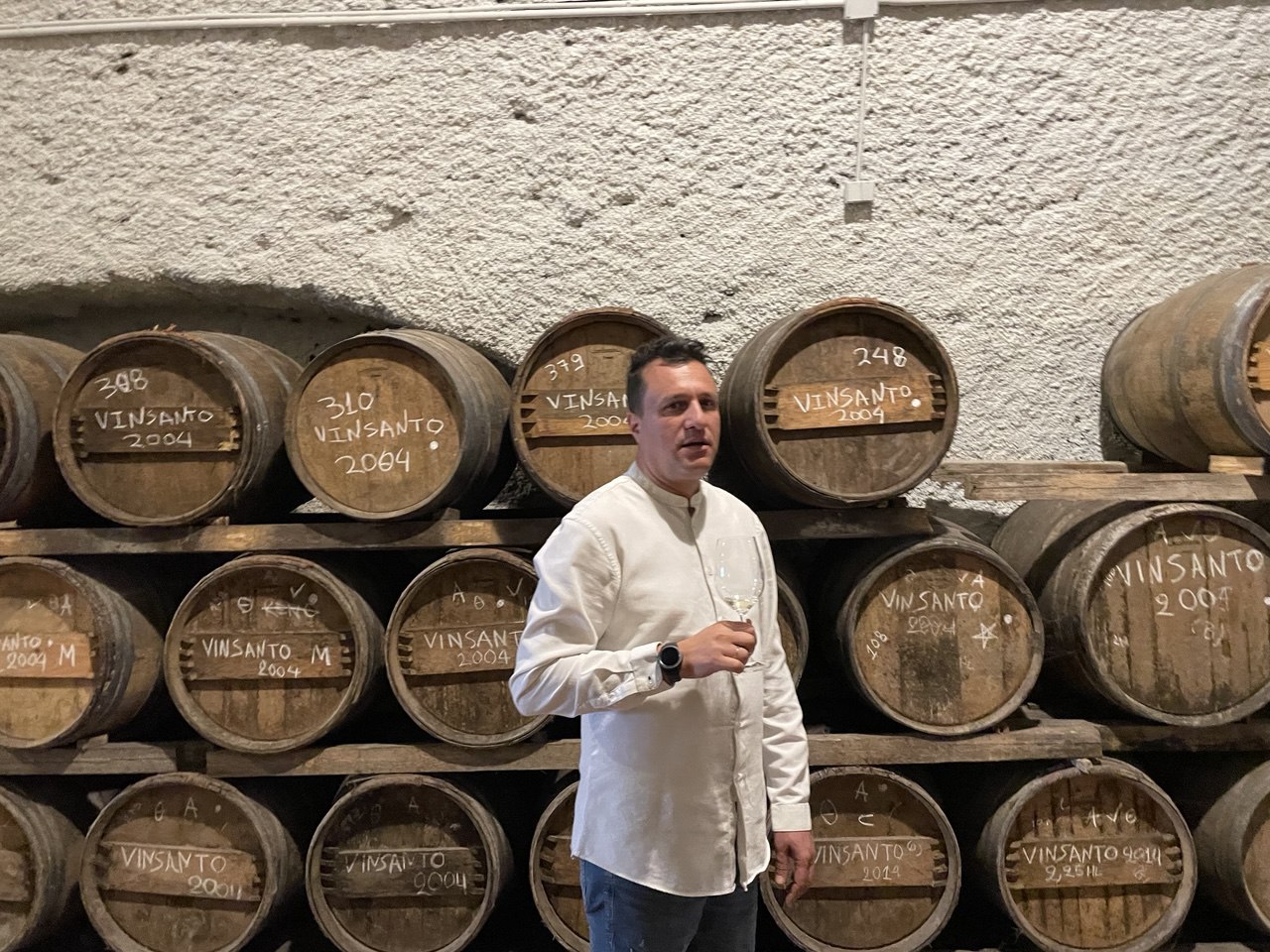
Yiannis was born in Athens and has called Santorini home for the past seven years. With a Bachelor’s degree in Tourism and over 20 years of experience across tourism and wine, he designs Wineland experiences with the confidence of someone who knows both the island and the glass. He guides guests through Santorini’s wines with clarity and warmth, making wine approachable for beginners while still exciting for seasoned enthusiasts.