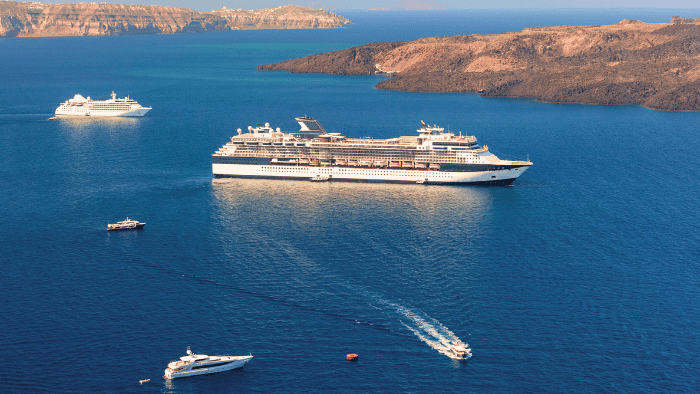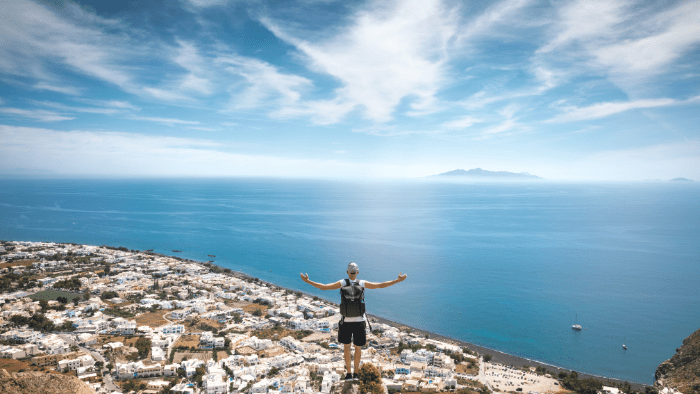
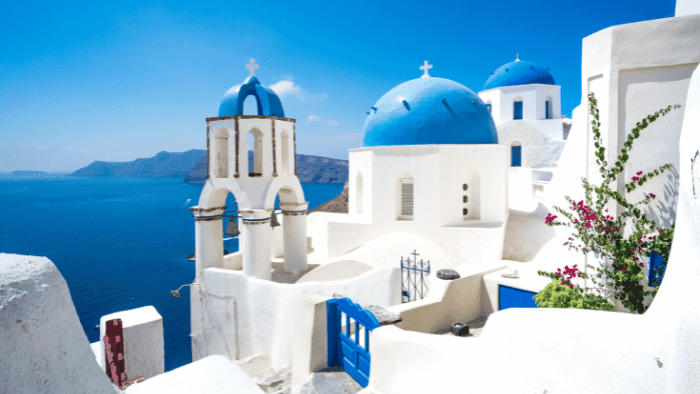
Santorini looks like a painting made from light with whitewashed homes cling to the caldera and a few Santorini blue domes punctuate the skyline like brushstrokes. Most people ask the same question the moment they arrive: Why these colors, and why here? The answer blends climate, hygiene, history, religion, and identity, and it explains more than a postcard ever could.
The short answer
Santorini’s iconic palette did not start as a design trend. It started as problem-solving.
- People chose white because it helps reflect harsh sun, cool interiors, and pair well with limewash, a practical coating with mild antibacterial qualities.
- Greek authorities and local communities also pushed whitewashing during public health concerns in the early 20th century, and many sources link this to cholera-era sanitation measures.
- The blue domes belong mostly to churches, and the island has fewer famous blue domes than social media suggests.
- Blue connects to national colors, local tradition, and folk beliefs that treat blue as protective.
Now let’s unpack each piece in a way that makes the whole story click.
Why Santorini houses are white
White reflects heat and fits the Aegean climate
Santorini faces intense sun for much of the year. White surfaces reflect more light than dark stone, so homes stay cooler with less heat absorption.
That matters in villages built on cliffs, where airflow helps but shade can be limited.
What you notice when you walk the lanes:
- Sunlight feels sharp in open areas.
- Narrow alleys create shade, and the white walls bounce light into the passageways.
- The whole village looks bright because the architecture works with the climate, not against it.
Limewash makes “white” practical, not just pretty
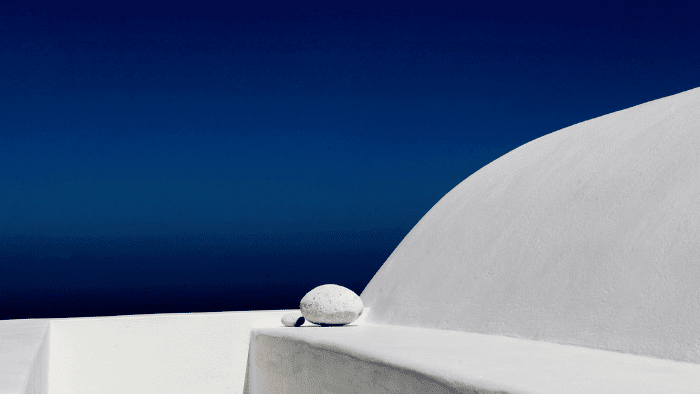
Locals traditionally used limewash (often slaked lime mixed with water) because it cost little, applied easily, and refreshed quickly. Many sources also point out its mild antibacterial qualities, which made it useful for sanitation.
You can think of limewash as an early form of “maintenance plus cleanliness” in one step.
Key benefits of limewash in island conditions:
- It dries into a breathable coating that suits masonry.
- It freshens up fast after wind, dust, and salt air.
- It offers mild antibacterial properties that made it attractive for hygiene-focused whitewashing.
Public health history helped lock in the whitewashed look
Multiple travel and Greece-focused sources trace widespread Cycladic whitewashing to public health efforts in the late 1930s, often tied to cholera concerns and government orders to whitewash with lime.
Even if you never chase the exact wording of old decrees, the pattern stays consistent across sources: limewash equaled accessible disinfection, and islands had it in supply.
Why the domes are blue
Santorini Blue domes usually mark churches, not everyday houses
Santorini does not have blue domes on every building.
In fact, sources that focus on the churches note that most churches on Santorini are white, and only a limited number carry the famous blue domes people photograph. This detail matters because it explains the visual rhythm of Santorini: white dominates, and blue appears as a deliberate accent, often tied to religious structures.

Blue ties to national identity, sea, and sky
Many writers connect blue and white to the colors of the Greek flag and to the island’s surroundings, the blue sea and sky against white surf and cliffs. Even if you never think about symbolism, your eyes read it instantly. Blue and white look “right” in the Cyclades because the environment repeats those colors all day long.
Folk belief also treats blue as protective
Across Greek culture, many people associate blue with protection against the “evil eye” (mati). Some sources explicitly link blue hues with warding off negative energy or bad luck. This does not mean every blue dome exists “because of superstition.” It does mean that blue already carried meaning, so communities felt comfortable using it in prominent places.
A practical reason appears too: blue pigment availability
Several sources mention loulaki, a blue cleaning powder or dye used in households, as one reason blue paint became easy and inexpensive to make or mix with lime-based coatings. So blue did not always require expensive pigments. In many cases, people could produce a recognizable Cycladic blue using materials they already had.
The history factor that standardized blue and white
The 1967–1974 military regime shaped public life, including aesthetics
Greece lived under a military dictatorship commonly called the Regime of the Colonels, from 1967 to 1974. More than one source claims authorities during this era mandated or strongly pushed blue-and-white schemes in parts of the Cyclades as a patriotic visual standard.
After mandates faded, tradition and tourism kept the palette strong
Even after rules relaxed, many communities continued the blue-and-white look because it had become:
- familiar,
- practical,
- and attractive to visitors.
In other words, the “Santorini look” survived because it worked, and because people loved it.
Cycladic architecture explains why the colors look so striking
The shapes come from function, not decoration
Cycladic settlements developed features that help with:
- wind,
- heat,
- and dense village layouts.
Smooth edges, curved roofs, and compact forms can reduce wind pressure and help structures sit comfortably in tight spaces.
On Santorini, you also see architecture shaped by the caldera’s dramatic terrain, where buildings stack and terraces matter.
Santorini adds volcanic geography to the Cycladic blueprint
Santorini’s landscape comes from volcanic history, and villages sit on cliffs above the caldera. That setting makes the bright palette feel even stronger.
White surfaces stand out against:
- dark volcanic rock,
- deep blue water,
- and the high-contrast light that defines the Aegean day.
You can see why photographers chase it, even before you know the story.
How Santorini stays so white
Regular whitewashing keeps the look fresh
Some guides describe a recurring tradition where residents refresh white paint seasonally, often in spring, including the period leading up to Easter.
This upkeep matters because island conditions punish exterior walls:
- salt air,
- wind-driven dust,
- and strong sun exposure.
“Perfect white” takes work in a real village
Santorini looks effortless in photos, but it is not effortless in practice.
Maintenance keeps the villages bright, and it also preserves a shared local identity that travelers now recognize worldwide.

How to see the Santorini blue domes and whitewashed villages responsibly
This topic has a clear traveler intent behind it: you want the story, but you also want to experience the view.
Where to find iconic blue domes in Santorini
Start with the places most associated with classic photos:
- Oia: Many visitors look for the famous blue domes near the village’s cliffside lanes, and guides often point photographers to specific viewpoints.
- Firostefani / Fira area: The Three Bells of Fira, also called the Catholic Church of the Dormition, stands out for its blue dome and bell tower, and sources date it to the 18th century (with later restorations).
- Imerovigli: Several well-known churches and viewpoints sit along the caldera edge, and some guides list blue-domed churches in the area.
Photo timing tips that make the colors pop
Use simple timing rules. They work for phones and cameras.
- Go early: Sunrise light softens contrast and reduces crowds in Oia.
- Avoid midday glare: Hard light flattens detail and can blow out whites.
- Use golden hour: Late afternoon adds warmth while keeping the blue rich.
Respect matters more than the shot
These villages are living communities, not film sets.
Quick etiquette checklist:
- Do not climb on roofs, terraces, or church ledges.
- Keep voices down near churches and private homes.
- Ask before photographing people up close.
- If you use a drone, follow local rules and keep distance from crowds and religious sites.
Turn the color story into a better Santorini day
Once you understand the “why,” you can plan smarter.
If you build a list of best things to do on Santorini, add these low-effort, high-reward ideas:
- Walk part of the caldera path for changing angles on white-and-blue villages.
- Visit a church viewpoint, then step into quieter lanes to see everyday Cycladic life.
- Pair architecture with local culture, for example a tour in Santorini that combines scenic stops with storytelling.

Santorini’s white houses and blue domes do not exist for one single reason. They exist because the island needed solutions that matched its sun, its hygiene realities, its materials, and its identity.
White reflects heat and pairs with limewash practicality. Blue highlights sacred spaces, echoes national color, and leans on traditions that treat blue as meaningful and protective. When you walk Santorini with that context, you stop seeing “cute buildings.” You start seeing a place that designed itself for survival, then turned that survival into beauty.
FAQ
Why are Santorini houses painted white?
People used whitewash because it reflects harsh sunlight and helps keep interiors cooler. Many sources also link widespread whitewashing to lime-based sanitation practices, especially during public health concerns in the early 20th century.
Are there many blue domes in Santorini?
Santorini has fewer famous blue domes than most people expect. Many churches on the island are white, and only a limited number carry the iconic blue domes that appear in postcards and social media.
Why are the church domes blue in Santorini?
Blue connects to Greek national colors and the island’s natural palette of sea and sky. Some traditions also associate blue with protection against the “evil eye.”
Did the Greek government require houses to be painted white and blue?
Multiple sources say authorities pushed or mandated blue-and-white schemes in the Cyclades during the 1967–1974 military dictatorship. This period helped standardize the look across islands.
What is limewash, and why did people use it?
Limewash is a traditional coating made from lime and water. Sources describe it as a practical exterior finish with mild antibacterial qualities, and it was easy to apply and refresh.
Where can I see the most famous blue domes in Santorini?
Many visitors head to Oia for classic views. For the “postcard church” look near the caldera, many travelers also visit the Three Bells of Fira area between Fira and Firostefani.