
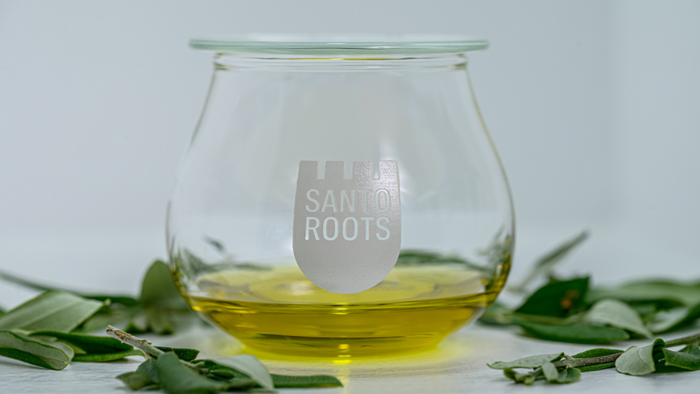
Santorini is one of the most photographed places on earth. But its most remarkable things are not visible in any skyline shot. They are in the glass and on the plate: wines unlike anything produced elsewhere, and olive oils shaped by the same ancient volcanic soil that defines the entire island.
This guide covers what every visitor should know before sitting down to taste. What the wines are, why they taste the way they do, what Vinsanto actually is, and why Santorini olive oil deserves as much attention as the wine.
The short version: Santorini produces some of the most distinctive white wines in the world. Its olive oil is equally shaped by volcanic terroir. Both are worth tasting properly.
Why Santorini Wine Tastes Like Nowhere Else
To understand Santorini wine, you first have to understand the ground it grows in. Around 1600 BC, a massive volcanic eruption reshaped the island entirely, leaving behind a soil of volcanic ash, pumice, and solidified lava. It contains almost no organic matter, drains rapidly, retains almost no water, and by every conventional measure should not support serious viticulture.
And yet it produces some of the most age-worthy white wines in Europe.
Volcanic Soil and Ancient Vines
Three factors work together to create Santorini’s wine character.
Volcanic soil. The pumice and ash force vine roots to push 15 to 20 metres deep to find water. That stress concentrates flavor dramatically. Yields sit between 400 and 600 kg per hectare, compared to 5,000 to 8,000 kg in most European wine regions.
No phylloxera. The near-sterile volcanic soil cannot support the louse that devastated vineyards across Europe in the 19th century. Many Santorini vines survive on their original rootstocks, with some estimated to be over 200 years old. In a region where most French vineyards were replanted after 1870, Santorini’s continuity is remarkable.
Ancient vine age. The Santorini PDO covers the entire island and recognizes these conditions formally. Vine age, volcanic stress, and a traditional farming technique that has barely changed in centuries define the appellation.
The Kouloura System
Santorini’s vines do not grow upright. Farmers wind them into low basket shapes close to the ground, a technique called kouloura. The basket protects the grapes from the fierce Aegean winds and traps morning dew, which serves as the vine’s primary water source in a climate with almost no summer rainfall.
This is not a tradition maintained for tourism. It is still the most practical way to grow grapes on this island, and it has been for centuries.
The Wines of Santorini
Santorini holds a Protected Designation of Origin (PDO) covering the entire island. Within that, several distinct wine styles are worth knowing before your first tasting.
Assyrtiko: The Island’s Signature Grape
Assyrtiko accounts for over 80% of Santorini’s vines and is the grape that put the island on the international wine map. It is bone dry, high in natural acidity, and carries a salinity and minerality that wine writers consistently trace back to the volcanic soil.
Expect citrus, pear, crushed pumice, and a clean, long finish. The structure surprises most first-time tasters: the freshness of a white wine paired with the backbone of something much more serious. It pairs naturally with seafood, grilled fish, and anything dressed with lemon.
Nykteri: The Night Wine
Nykteri comes from the Greek word for night. This traditional style uses Assyrtiko grapes harvested and pressed after dark to preserve freshness in the summer heat. It typically spends time in oak, giving it a rounder texture and slightly higher alcohol than standard Assyrtiko. If you prefer white wines with more body, Nykteri is a natural choice.
Vinsanto: Santorini’s Celebrated Sweet Wine
Vinsanto is the island’s most celebrated specialty, and one of the most misunderstood wines in Greece. It uses Assyrtiko grapes (at least 51%, per PDO rules) laid out in the sun after harvest and left to dry for up to two weeks.
The water evaporates, the sugars concentrate, and what goes into the barrel is an intensely sweet, amber-colored must aged in oak for a minimum of 24 months, often far longer. The result layers dried fig, date, honey, and citrus peel into a finish that can develop for decades.
It is not cloying. Assyrtiko’s natural acidity keeps Vinsanto balanced and clean, which is exactly why the best examples age so well. The name comes from Vino di Santorini, not from Italian Vin Santo, despite the similarity.
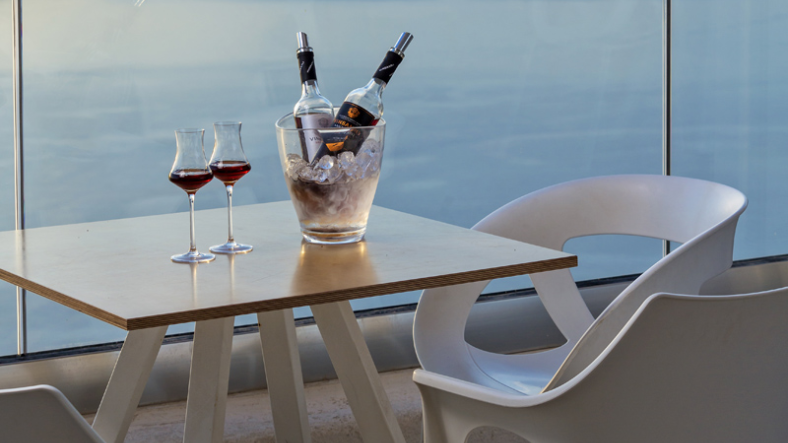
Reds and Rare Varieties
Santorini produces small quantities of red wine from two indigenous varieties, plus one aromatic white grape worth knowing.
| Variety | Character |
|---|---|
| Mavrotragano | Deep color, firm tannins, serious aging potential. One of Greece’s most exciting reds. |
| Mandilaria | Lighter in color, often used in blends. Less common as a single-variety expression. |
| Aidani | Aromatic white, often blended with Assyrtiko to add floral lift. |
These varieties appear in small quantities and rarely reach export markets. Tasting them on the island is one of the genuine advantages of visiting in person.
Santorini Olive Oil: The Other Thing Worth Tasting
Most visitors come to Santorini for the wine. Fewer realize the island produces olive oil with the same volcanic character, shaped by the same soil, the same dry Aegean climate, and centuries of agricultural tradition that predate modern tourism entirely.
What Makes It Different
Santorini’s olive groves share the same terroir logic as its vineyards. The volcanic pumice drains fast, the trees receive almost no irrigation, and the olives that result are concentrated and expressive in a way that differs noticeably from oils produced in more fertile regions of Greece.
Greece ranks third in global olive oil production according to the International Olive Council, yet regional terroir variation within the country remains widely underappreciated. Volcanic Santorini sits at the more distinctive end of that spectrum.
How to Taste Olive Oil Properly
Most people have never tasted olive oil the way it is meant to be evaluated. The approach mirrors wine tasting closely.
- Warm the oil by cupping a small amount in your hands for 30 seconds.
- Inhale to pick up primary aromas: grass, artichoke, green apple, or ripe fruit depending on the variety.
- Sip and coat the palate, then breathe in through your mouth to open the flavor.
- Note the finish. A peppery catch at the back of the throat signals high polyphenol content and freshness, both markers of quality.
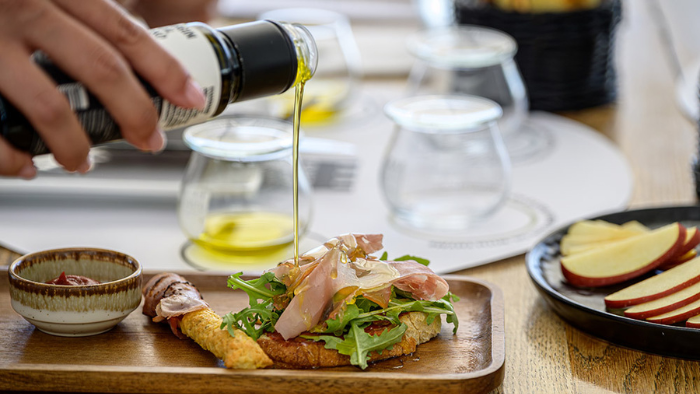
The difference between varieties becomes clear in side-by-side comparison. Some oils are grassy and intensely peppery. Others are smooth and fruity. The same volcanic soil produces noticeably different results depending on variety, harvest timing, and production method. Without comparison, it is easy to miss what makes each oil distinctive.
What to Expect at a Wine and Olive Oil Tasting in Santorini
Santorini has dozens of wineries, and the experience varies widely between them. Some are large cooperatives with terrace bars and tourist crowds. Others are small family operations where the person pouring the wine also grew the grapes. Both have their place, but if you want to learn something, the format matters as much as the location.
Why a Guide Makes a Difference
Tasting wine without context is enjoyable. Tasting it with a certified sommelier who can explain why this Assyrtiko tastes different from the one you had yesterday, what the winemaker did differently, and how the specific plot shapes the glass in front of you, that is a different experience entirely.
The same applies to olive oil. Most people can tell two oils apart. Fewer can explain why, or what to look for. A proper guided tasting bridges that gap.
What a Good Tasting Session Covers
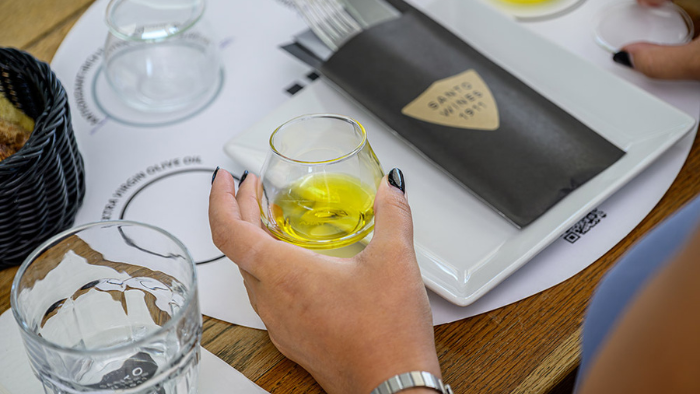
A well-structured wine and olive oil tasting in Santorini should include:
- Visits to at least two wineries, so you can compare producers and styles side by side
- Coverage of the main grape varieties: Assyrtiko in its different expressions, Aidani, Mavrotragano, and Vinsanto
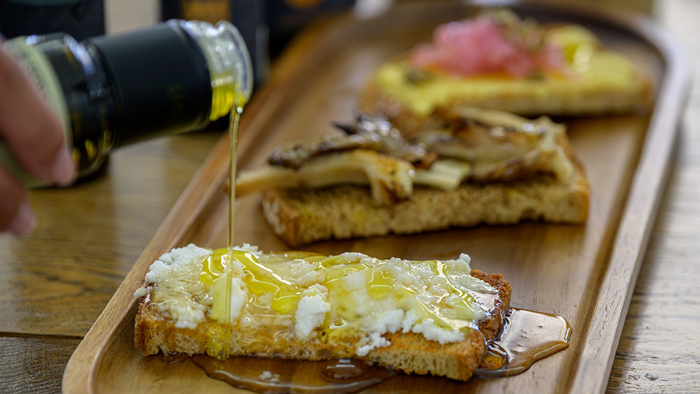
- A dedicated olive oil tasting with food pairings, not a drizzle on bread as an afterthought
- Explanation of the kouloura vine training, volcanic terroir, and what makes Santorini PDO wines distinct
- Time in the vineyards, not just the tasting room
The Santorini Wine and Olive Oil Tasting Tour from Wineland Tours covers all of this in a private 3.5-hour format. It includes stops at Domaine Sigalas and Gavalas Winery, plus a dedicated olive oil tasting at Santo Wines above the caldera, guided by a WSET-certified sommelier at every stop. It is one of the most complete ways to cover both subjects in a single session.
You can also explore the full-day Private Santorini Wine Tour to 3 Wineries if you want more winery coverage and a deeper dive into the island’s wine styles.
Quick Reference: Santorini Wine and Olive Oil at a Glance
| Topic | Key Facts |
|---|---|
| Main grape variety | Assyrtiko (80%+ of all vines) |
| Wine styles | Dry white, Nykteri (oaked), Vinsanto (sweet), limited reds |
| Vine age | Many vines are 60 to 200+ years old |
| Vine training | Kouloura basket system, unique to Santorini |
| Why no phylloxera | Volcanic soil is near-sterile; vines survive on original rootstocks |
| Olive oil character | Concentrated, peppery to fruity; shaped by volcanic terroir |
| Best way to taste | Side-by-side comparison with a guide who can explain the differences |
| PDO status | Santorini PDO, Nykteri PDO, Vinsanto PDO all recognized |
Ready to Taste Santorini Properly?
Santorini wine and olive oil are not souvenirs. They are the product of a specific place, a specific soil, and thousands of years of people figuring out how to grow something extraordinary in conditions that should make it impossible.
The best way to understand that is to taste it with someone who can show you what you are looking at.
The Santorini Wine and Olive Oil Tasting Tour is a private 3.5-hour experience with stops at Domaine Sigalas, Gavalas Winery, and a dedicated olive oil tasting at Santo Wines, guided by a WSET-certified sommelier. It starts from €200 per person and includes hotel, port, and airport pickup. Free cancellation applies up to three days before departure.
Ready to Plan Your Visit?
Book a Private Santorini Wine Tour with Wineland Tours
Whatever season you choose, a private wine tour with a certified sommelier is one of Santorini’s most memorable experiences. Browse our estate winery tours, sunset tastings, and curated island journeys.
Frequently Asked Questions
What wine is Santorini famous for? Assyrtiko is the island’s signature grape, producing dry whites with high acidity, strong minerality, and a distinctive saline character. Vinsanto, the sweet wine made from sun-dried Assyrtiko grapes, is equally celebrated and one of Greece’s most recognized wine specialties.
Is Santorini olive oil different from other Greek olive oils? Yes. The volcanic soil, dry climate, and low-irrigation growing conditions give Santorini olive oils a concentrated flavor profile that differs from oils produced in more fertile regions of Greece. Varieties range from intensely peppery to smooth and fruity, and side-by-side comparison brings those differences into sharp focus.
What is Vinsanto? Vinsanto is a naturally sweet wine made from Assyrtiko grapes dried in the sun after harvest. PDO rules require a minimum of 51% Assyrtiko and at least 24 months of oak aging. The best examples develop for decades in the bottle.
Do I need wine knowledge to enjoy a tasting in Santorini? No. A good guide adjusts the experience to your level. The most rewarding tastings are the ones where you leave understanding more than when you arrived, regardless of where you started.
What should I eat during a wine tasting in Santorini? Santorini’s local food pairings are part of the experience. Fava puree, white eggplant, fresh seafood, local capers, and Cycladic cheeses all bring out different dimensions of Assyrtiko and Vinsanto. A tasting session that includes food pairings will always outperform one that does not.
Written by
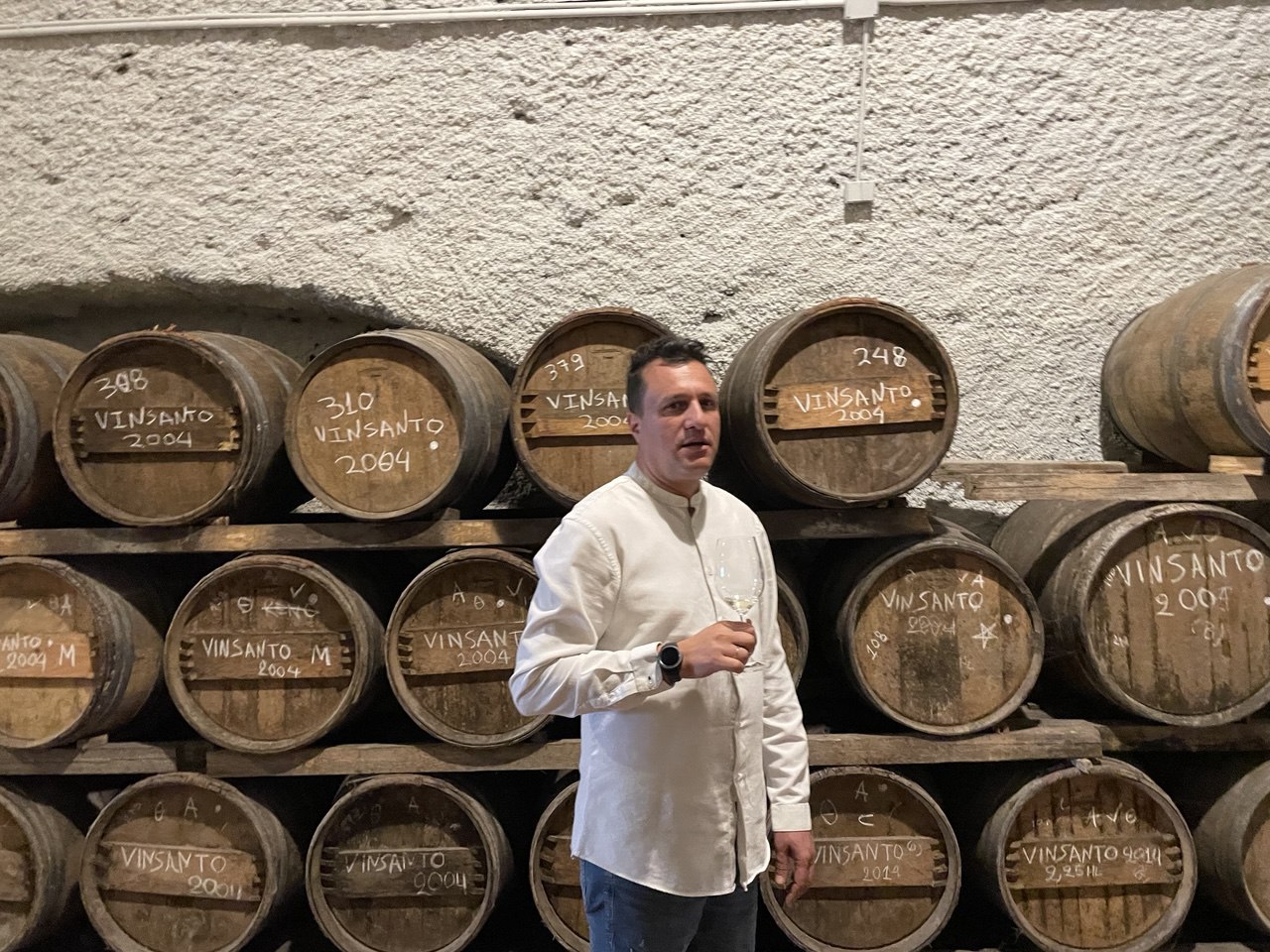
Yiannis Kotzampasakis
Co-Founder & CEO · WSET Certified Sommelier · Wineland Tours
Yiannis was born in Athens and has called Santorini home for the past seven years. With a Bachelor’s degree in Tourism and over 20 years of experience across tourism and wine, he designs Wineland experiences with the confidence of someone who knows both the island and the glass. He guides guests through Santorini’s wines with clarity and warmth, making wine approachable for beginners while still exciting for seasoned enthusiasts.