
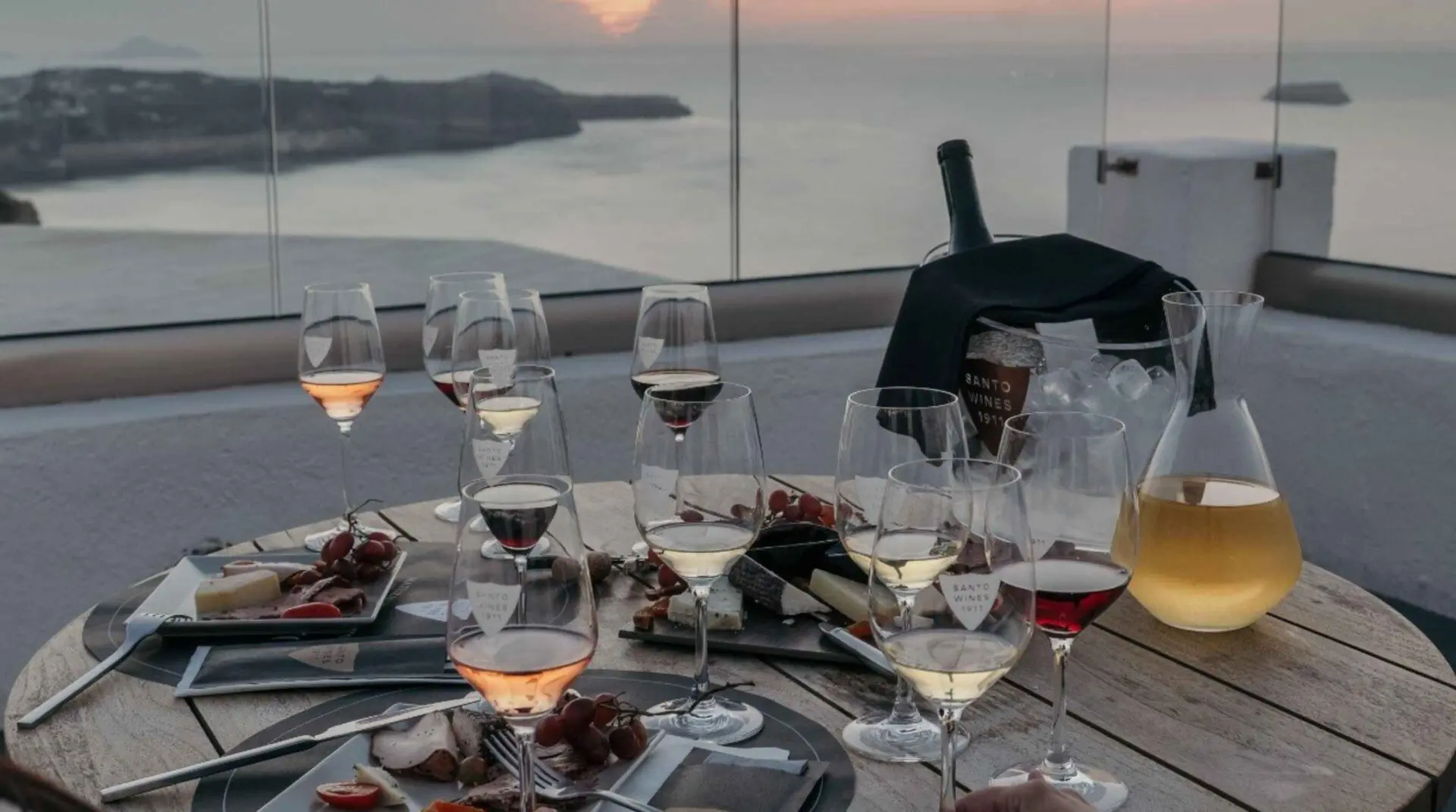
Two travelers visit the same three wineries on the same afternoon. One comes home able to explain why Assyrtiko tastes of sea salt, which bottle to buy, and what a 200-year-old vine looks like woven into a basket on the ground. The other comes home with a receipt.
The difference was not the wineries. It was the guide.
Most Santorini wine tours sold online are mainly transport. A van collects you, drives you to a winery, hands you off at the tasting counter, and waits in the car park while a staff member pours four samples for a room of strangers. That is a drop-off tour. It works, in the sense that wine reaches your glass.
A guided tour is a different product. Someone who knows the island, the producers, and the grapes travels with you, sits at the table, and connects what you are drinking to the ground it grew in.
This guide explains how to tell the two apart before you pay.
Quick Answer
The best Santorini wine tours are led by a sommelier who stays with you through every tasting. Drop-off tours only provide transport: the driver waits outside while winery staff pour a standard flight.
To tell them apart before booking, ask the operator one question: who leads the tasting, your guide or the winery staff? If the answer names the winery, you are buying transport.
What a complete Santorini wine tour includes:
- A WSET-certified sommelier or trained wine guide present at every tasting, not just a driver
- A structured progression across producers: dry to sweet, young to aged, rather than three unrelated tastings
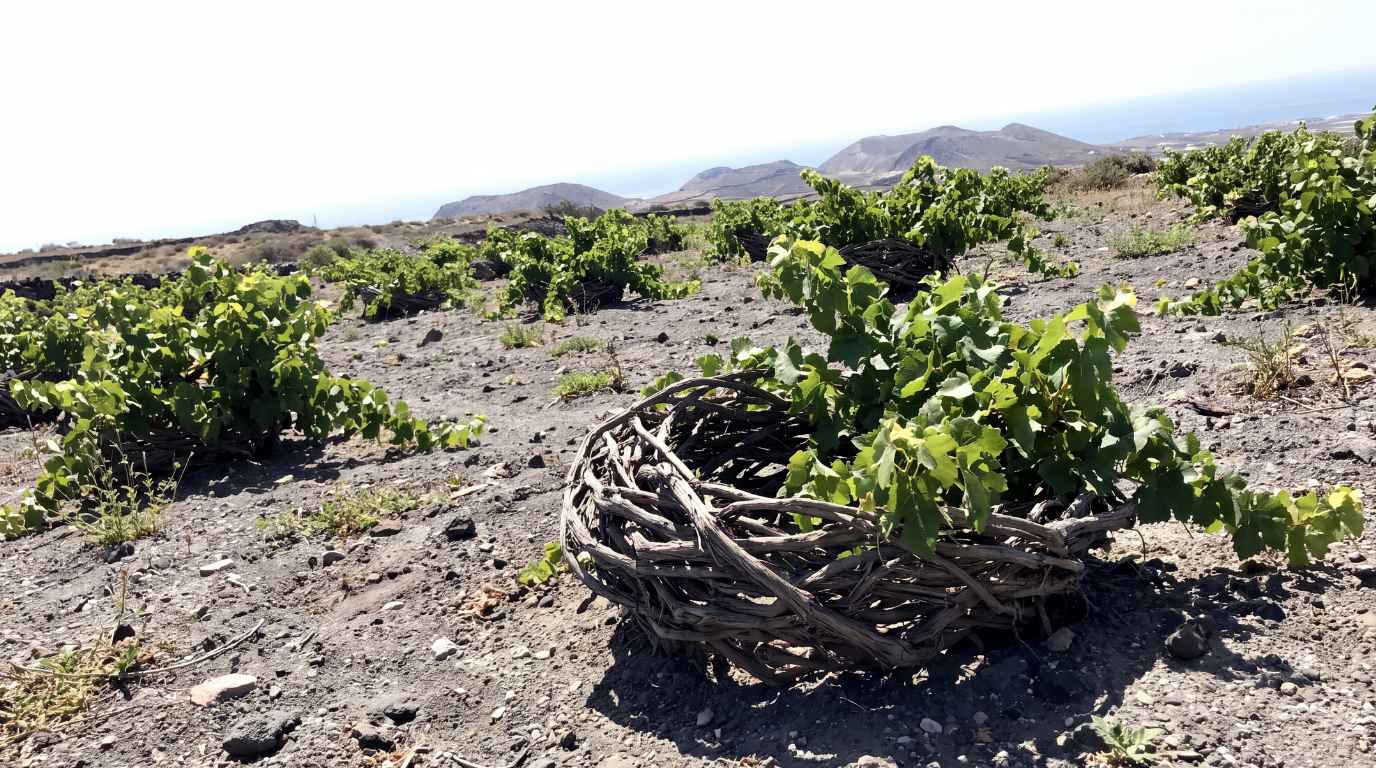
- A vineyard walk to see the kouloura basket-trained vines that make Santorini wine possible
- Cycladic food pairings between pours to reset the palate
- Pickup and drop-off included, because Greece sets the blood alcohol limit at 0.5 g/l and roughly 200ml of wine reaches it
What drop-off tours skip: the sommelier (the first cost cut), boutique estates that cap group sizes, the vineyard walk, food pairings, and any flexibility in the route.
Typical prices: around €70 per person for large-group transport-only tours, €120-150 for shared small-group, and from €150 per person for private sommelier-led tours based on a group of four.
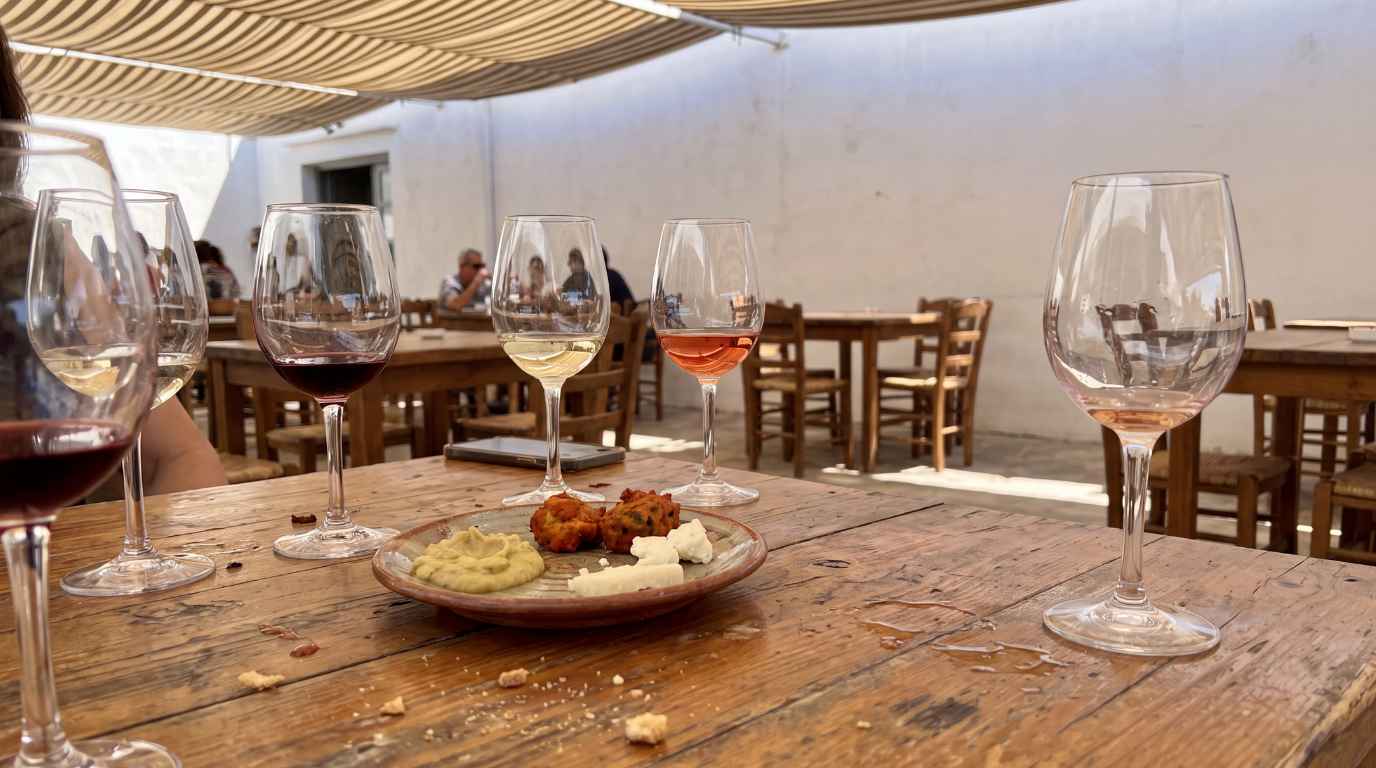
What Separates the Best Wine Tours in Santorini From a Winery Drop-Off
Nearly every operator advertises the same nouns: three wineries, twelve wines, hotel pickup, caldera views. The nouns are identical. The experience is not.
Here is the honest test. On a drop-off tour, the winery staff are your only source of information. On a guided tour, your guide is the constant, and the winery is the setting.
That single structural difference produces everything below.
What a drop-off tour actually looks like
- Your driver parks and waits outside; you enter the tasting room alone.
- A winery employee pours a standard flight for whoever is booked at that hour.
- The tasting runs to the winery’s script, which exists partly to sell you bottles of that winery’s wine.
- Nobody connects winery one to winery two, so three visits produce three unrelated tastings instead of one progression.
- Questions get short answers because the pourer is serving eleven other people.
None of that is dishonest. It is just thin.
What a guided tour adds
- A sommelier or trained wine guide stays with you through every tasting.
- Wines get compared across producers, so you learn what is Santorini and what is a winemaker’s choice.
- The itinerary follows a logic: light to heavy, dry to sweet, young to aged.
- You can ask anything, including the beginner questions people are embarrassed to ask a stranger.
- The guide has no incentive to sell you one estate’s wine, so recommendations stay honest.
The shortcut: ask an operator who leads the tasting. If the answer names the winery rather than a person traveling with you, you are buying transport.
What a Guided Santorini Wine Tasting Should Include
The best wine tasting in Santorini is not the one with the most pours. It is the one where the pours mean something by the end.
Four elements separate a real tasting from a queue at a counter.
1. Guidance from someone qualified
Look for a named credential. WSET certification is the international standard, and it signals formal training in tasting technique, viticulture, and how to teach both.
Wineland’s tours run with Yiannis Kotzampasakis, a WSET-certified sommelier and co-founder, or a guide trained to the same standard. After choosing Santorini for its wine culture and history, he knows the producers personally, which is why a tasting can go off-script when your curiosity does.
2. Terroir explained on the ground, not on a placard
Santorini grows wine in conditions that should not work. Rainfall rarely passes 300mm a year, which makes it one of Europe’s most arid wine regions.
Growers answered with the kouloura: vines woven by hand into a low basket resting on volcanic soil, sheltering the grapes from the meltemi winds and trapping night moisture inside the crown. Decanter describes the training of each vine as a jeweller’s work, and the harvest as back-breaking.
A good guide walks you to one and shows you. A drop-off tour drives past several thousand of them without a word.
3. A tasting with structure
Santorini’s PDO rules shape three distinct styles from one grape. Dry PDO Santorini is often bottled as 100% Assyrtiko, with the appellation allowing small percentages of Aidani and Athiri. Nykteri comes from overripe grapes, spends a minimum of three months in oak, and stands at 13.5% alcohol. Vinsanto is led by Assyrtiko at 51% or more, made from sun-dried grapes, and aged at least two years in barrel, though many estates hold it for 5, 10, or 15 years.
Those are three expressions of one grape. Tasted in the right order, with someone explaining the jump, they teach you the island. Tasted at random across three car parks, they are just twelve drinks.
4. Logistics that disappear
Reservations, timing, the drive, the return. Handled. Greece sets the blood alcohol limit at 0.5 g/l for standard drivers, and roughly 200ml of wine can put you there. A tasting day and a rental car do not belong in the same sentence.
Tip: Ask whether food is included. Cycladic bites between tastings are not a nicety. They reset your palate and keep twelve pours pleasant instead of punishing.
Private, Small Group, or Coach: Which Winery Tour Format Fits You
Format determines how much of the guide you actually get.
| Format | Group size | What you get | Best for |
|---|---|---|---|
| Private | Your party only | Flexible pace, unlimited questions, route adjusted to your taste | Couples, wine lovers, travelers 50+, anyone who wants depth |
| Small group | 6-12 | Lower price, some guide attention, fixed route | Solo travelers, budget-conscious visitors |
| Coach | 20-40 | Transport and entry; guidance is minimal by design | Sampling the island cheaply |
The maths is simple. A guide split forty ways is not a guide. Wineland runs private-first for exactly this reason: the sommelier’s attention is the product, and it does not divide well.
If you want the full comparison, read our breakdown of private vs small group wine tours.
How Much a Santorini Wine Tasting Costs (and What You Pay For)
Santorini wine tasting prices cluster into three tiers. Knowing which tier you are looking at explains the gap instantly.
- Around €70 per person: large-group tour. Mostly transport to and from the wineries, with standard pickup points and no guided tasting. You are paying for the seat, not the sommelier.
- €120-150 per person: shared small-group tour. A real tour, but on a fixed schedule with your guide’s attention split across the group.
- From €150 per person: private sommelier-led tour. Wineland’s 3-hour mini wine tour starts at €150 per person, and the 5-hour daytime tour with three wineries and twelve wines from €165, based on a group of four.
Our full breakdown of Santorini wine tour costs covers every format in detail.
What cheap tours cut
Searches for wine tasting Santorini cheap are reasonable. Just know what the discount buys.
- The sommelier. The first cost removed, because it is the largest.
- Winery quality. Boutique estates cap group sizes; volume tours go where volume fits.
- Time. Faster stops, thinner pours, no vineyard walk.
- Food. Twelve wines on an empty stomach is not a tasting, it is an afternoon lost.
- Flexibility. Fixed route, fixed clock, whether or not you liked winery two.
Per hour of guided attention, a private tour costs less than the headline suggests. Compare €165 for five hours with a sommelier against €70 for five hours with a driver, then divide by what you remember a month later.
Tip: For two or more travelers, compare the private per-group rate against stacked shared tickets. The gap is usually smaller than it looks.
7 Questions to Ask Before You Book
Send these to any operator. The replies sort the field fast.
- Who leads the tasting, your guide or the winery staff? The single most revealing question there is.
- What are your guide’s wine credentials? WSET, DipWSET, or a named sommelier qualification. Vagueness is an answer.
- How many people will be in my group? “Up to 16” means 16.
- Which wineries, and why those? A real answer explains the progression. A weak one lists names.
- Do we walk in the vineyard? Kouloura vines are the reason Santorini wine exists. Seeing one takes ten minutes.
- Is food included? See above.
- What happens if a winery is unavailable? Weather and reservations shift routes. Good operators keep the standard; thin ones just drop a stop.
How to Read Santorini Wine Tour Reviews
Star ratings compress everything into one number. The words underneath tell you what you are buying.
Language that signals a guided experience
Reviewers who had a real tasting name the guide. They write things like “Yiannis explained why Assyrtiko tastes saline” or “we learned about the basket vines.” Specific knowledge in a review means knowledge was transferred. People do not invent terroir details.
Language that signals a drop-off
- Praise focused on the driver’s punctuality and the vehicle’s air conditioning.
- “Beautiful views” with nothing about wine.
- The guide is never named.
- “Rushed,” “felt like a schedule,” “wish we had more time at each stop.”
- Complaints about group size.
A useful pattern: in drop-off reviews, the wineries are the heroes. In guided-tour reviews, the guide is.
Check santorini wine tour reviews across sources, then sort by lowest rating. Weak operators fail the same way twice.
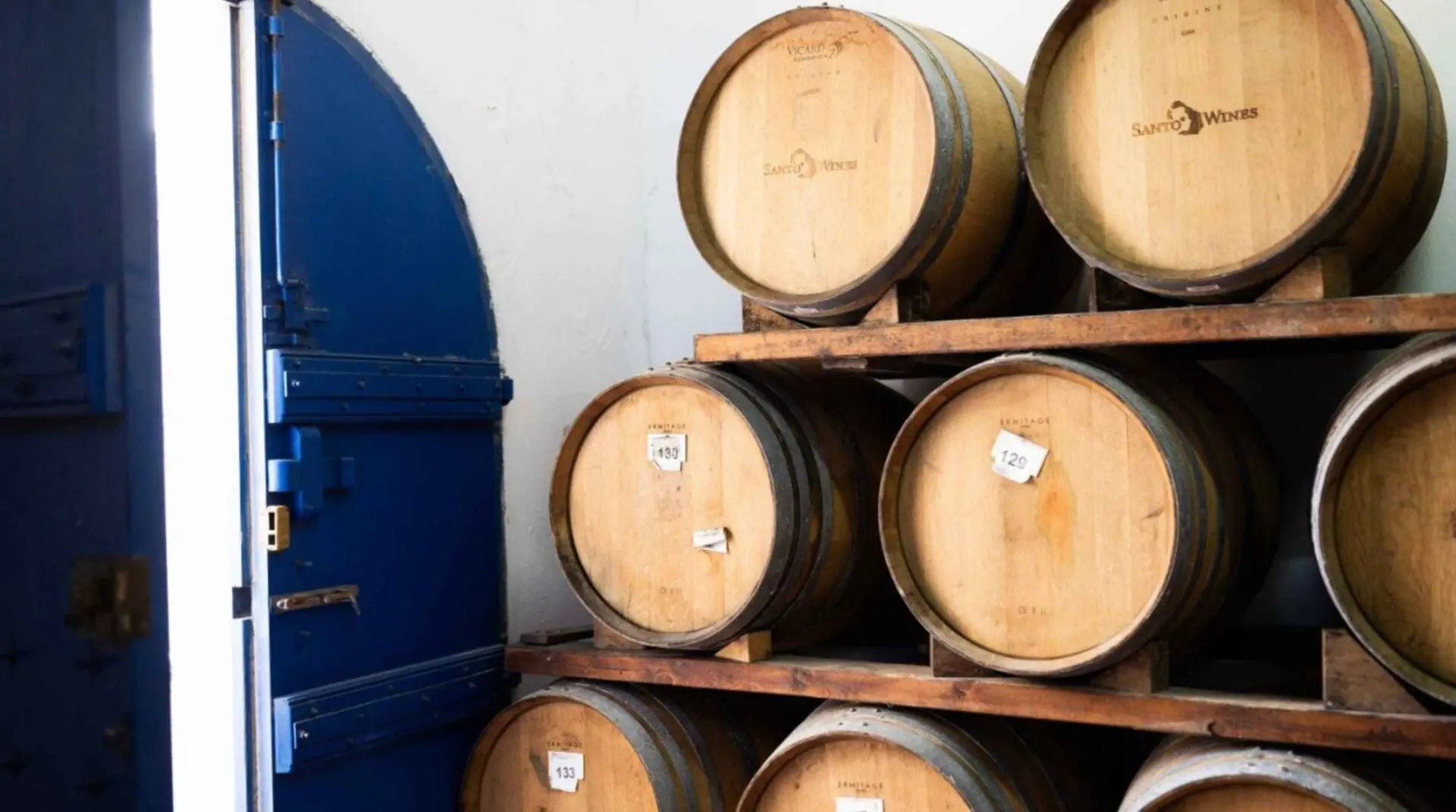
A 5-Hour Sommelier-Led Itinerary, Hour by Hour
Abstract comparisons only go so far. Here is what a guided day looks like in practice, based on Wineland’s 5-hour daytime tour: three estate wineries, twelve wines, one sommelier.
Hour 1: Pickup, vineyard walk and orientation. Collection from your hotel, the port, or the airport. The drive is not dead time. You cover volcanic soil, why Santorini vines survived phylloxera, and what to look for in the first glass. The first hour also included a history-rich vineyard walk where you will see the kouloura vines up close and find out what makes viticulture in Santorini so unique.
Hour 2: Winery one, foundations. A heritage estate such as Gavalas in Megalochori, one of the island’s oldest, working with Assyrtiko, Aidani, Mandilaria, and Mavrotragano. You start with the baseline: what unadorned Santorini Assyrtiko tastes like. Cycladic bites arrive alongside.
Hour 3: Winery two, contrast. Somewhere like Artemis Karamolegos, founded in 1952 and now the island’s third-largest producer. Same grape, different hands. Your sommelier walks you through what changed and why, which is the moment the day stops being a series of drinks.
Hour 4: Winery three, the payoff. An estate such as Venetsanos, built in 1947 as the island’s first industrial winery, perched over the caldera. Nykteri and Vinsanto land here, at the top of the progression, with the view.
Hour 5: Final tastings, questions and return. Finish the tour with another round of tastings, in-depth information about Santorini wines now that the basics are covered, answers to your questions, buying advice on which bottles are worth luggage space. Then drop-off.
The wineries rotate with availability and season. The structure does not, because the structure is the point.
Wineland’s Santorini lineup includes Sigalas, Santo Wines, Venetsanos, Art Space, Artemis Karamolegos, Argyros, Gavalas, Gaia, Oenops, and Anhydrous.
If you want help choosing between estates first, our guide to Santorini wineries breaks down which suits which traveler. When you are ready to book, browse the full range of Santorini wine tours.
Ready to Plan Your Visit?
Book a Private Santorini Wine Tour with Wineland Tours
Whatever season you choose, a private wine tour with a certified sommelier is one of Santorini’s most memorable experiences. Browse our estate winery tours, sunset tastings, and curated island journeys.
The Bottom Line
Santorini has roughly 1,200 hectares of vineyard, vines older than most countries’ wine industries, and a grape that behaves like nothing else in the Mediterranean. The island earns more than a counter and a car park.
Three things to carry into your booking:
- Ask who leads the tasting. Guide or winery staff. Everything follows from that answer.
- Read reviews for the guide’s name. Named guides mean guided tours.
- Price the attention, not the hours. The sommelier is the first thing budget tours cut, and the one thing a winery counter cannot hand you.
You get one wine day on this island. Spend it with someone who loves the subject.
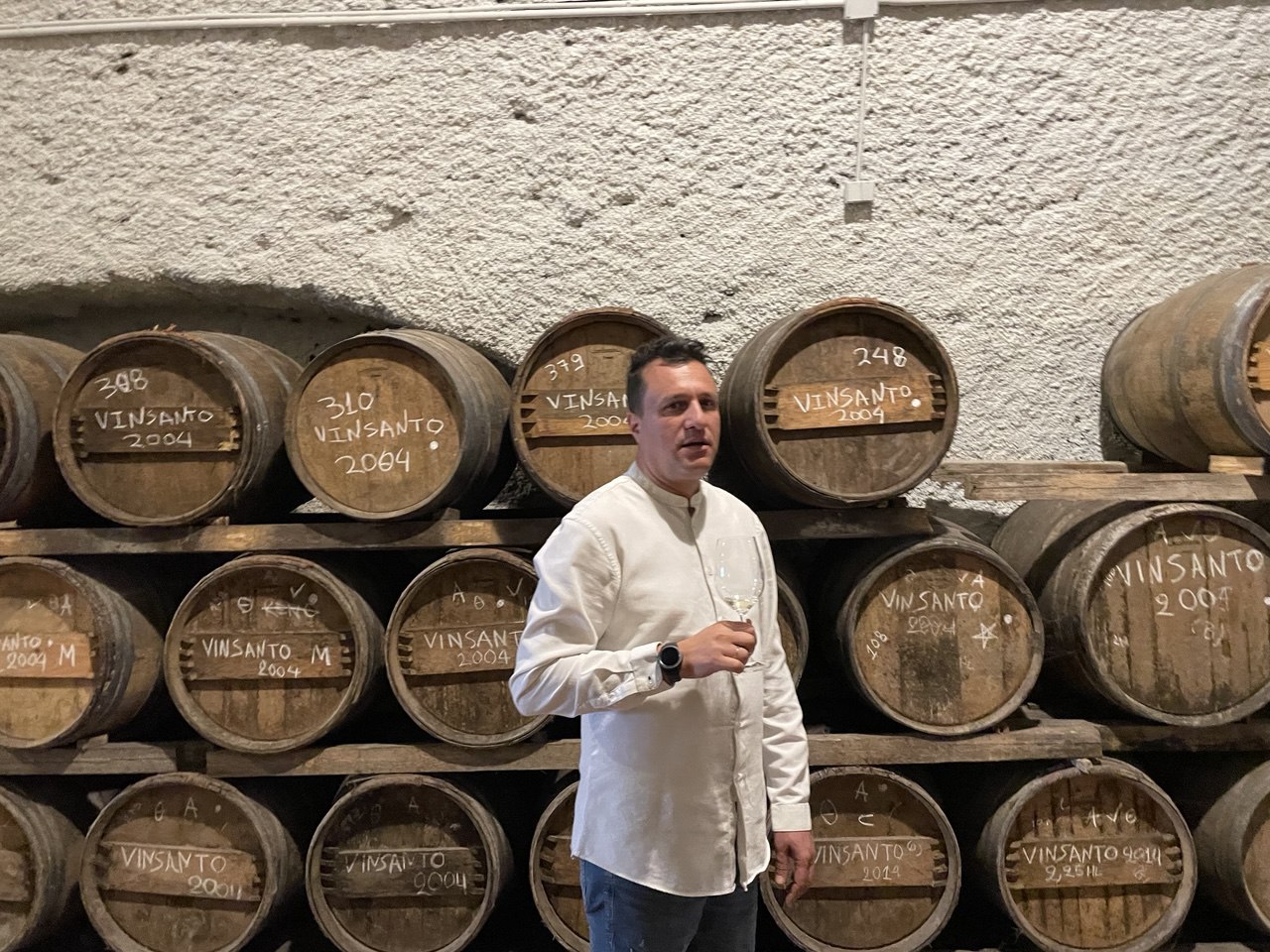
Written by
Yiannis Kotzampasakis
Co-Founder & CEO · WSET Certified Sommelier · Wineland Tours
Yiannis was born in Athens and has called Santorini home for the past seven years. With a Bachelor’s degree in Tourism and over 20 years of experience across tourism and wine, he designs Wineland experiences with the confidence of someone who knows both the island and the glass. He guides guests through Santorini’s wines with clarity and warmth, making wine approachable for beginners while still exciting for seasoned enthusiasts.
Frequently Asked Questions
What is the difference between a guided Santorini wine tour and a drop-off tour?
On a drop-off tour, a driver transports you to each winery and waits outside while winery staff pour a standard tasting flight. On a guided tour, a sommelier or trained wine guide stays with you through every tasting, compares wines across producers, and explains the volcanic terroir behind them. The guide is the difference, not the wineries, since both formats often visit the same estates.z
How do I choose the best wine tour in Santorini?
Ask who leads the tasting. If the operator names the winery staff rather than a guide traveling with you, you are buying transport. Then check the guide’s credentials (WSET certification is the international standard), the group size, whether the itinerary explains why those specific wineries were chosen, and whether food is included between tastings.
What should a good Santorini wine tasting include?
A qualified sommelier or wine guide, a tasting structured as a progression from dry to sweet rather than random pours, a vineyard walk to see the kouloura basket-trained vines, Cycladic food pairings to reset your palate, and all logistics handled including reservations and hotel pickup and drop-off.
How much does a Santorini wine tasting cost?
Large-group tours run around €70 per person and are mostly transport. Shared small-group tours cost roughly €120 to €150 per person. Private sommelier-led tours start from €150 per person for a 3-hour format and from €165 per person for a 5-hour tour with three wineries, based on a group of four.
What do cheap Santorini wine tours leave out?
The sommelier is cut first because it is the largest cost. Cheap tours also tend to visit high-volume wineries rather than boutique estates that cap group sizes, run faster stops with no vineyard walk, skip food pairings, and follow a fixed route with no flexibility.
How can I tell from reviews whether a wine tour is guided or a drop-off?
Reviewers who had a real guided tasting name their guide and mention specific things they learned, such as why Assyrtiko tastes saline or how basket vines work. Drop-off reviews praise the driver’s punctuality and the views, never name a guide, and often mention feeling rushed or complain about group size.
Why is Santorini wine tasting different from other wine regions?
Santorini receives under 400mm of rain a year, making it one of Europe’s most arid wine regions. Growers weave vines by hand into low baskets called kouloura that rest on volcanic soil, sheltering grapes from the meltemi winds and trapping night moisture. The island’s PDO rules produce three styles from one grape: dry Santorini, often bottled as 100% Assyrtiko; Nykteri, aged at least three months in oak at 13.5% alcohol; and Vinsanto, led by 51% or more Assyrtiko from sun-dried grapes and aged a minimum of two years.
Can I drive myself between Santorini wineries for a tasting?
Greece sets the blood alcohol limit at 0.5 g/l for standard drivers, and roughly 200ml of wine can reach that level. A tasting involving multiple wineries and a rental car is not compatible. Tours that include pickup and drop-off remove the problem entirely.